Introduction
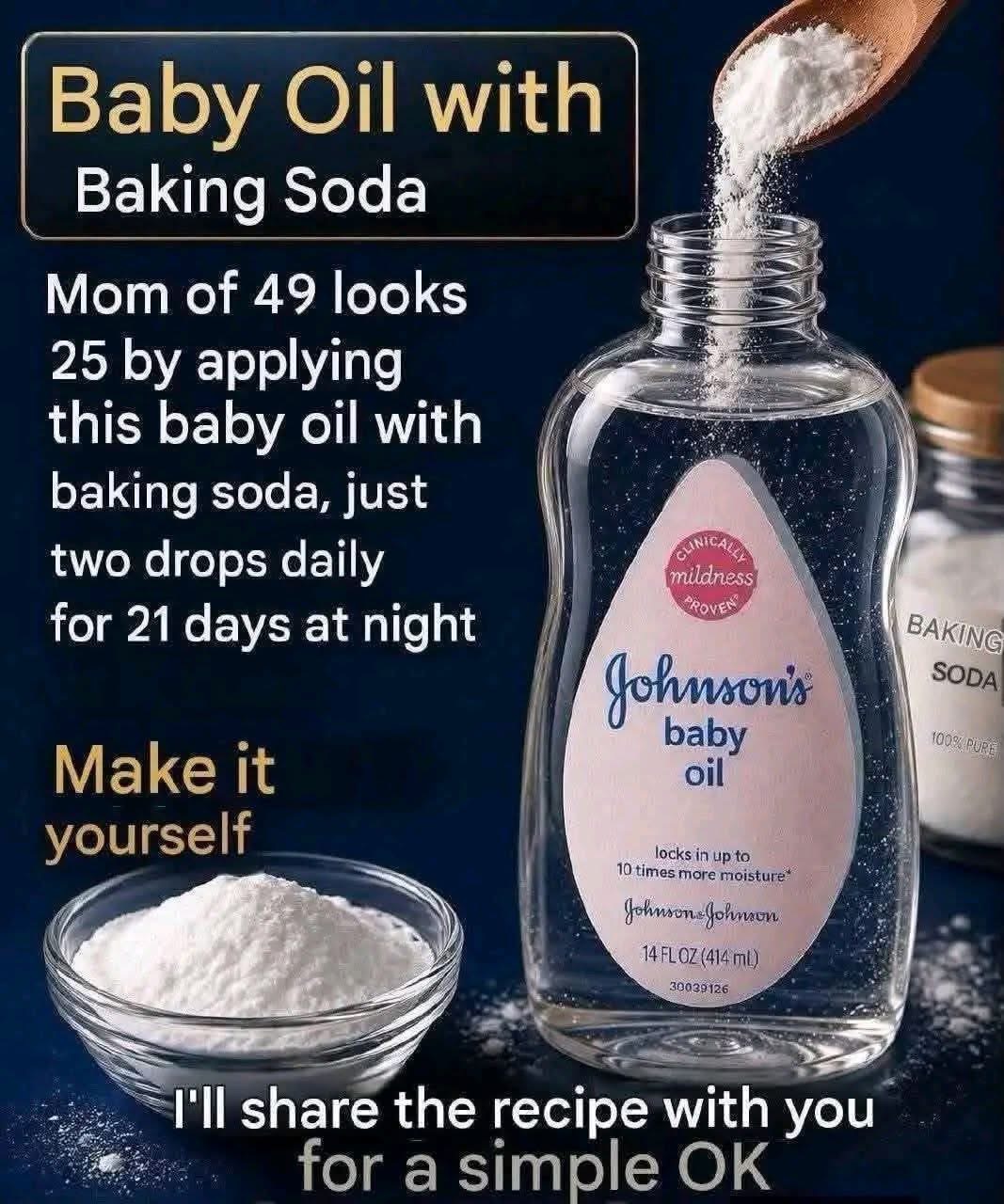
The combination of baby oil and baking soda has recently appeared in viral DIY skincare posts claiming that it can dramatically improve the appearance of mature skin and make someone look years younger.
While baby oil can help reduce the feeling of dry skin by providing an occlusive layer, the claim that mixing it with baking soda can make a person look 25 years younger has not been scientifically established. Skincare products should be used according to their intended directions, and individual skin reactions can vary.
If you’re interested in a simple at-home skincare routine, it’s better to approach this mixture as a viral beauty experiment rather than a proven anti-aging treatment.
Recipe Overview
| Category | Details |
| Recipe Type | DIY Skincare / Personal Care |
| Main Ingredients | Baby oil and baking soda |
| Intended Use | Cosmetic skincare experiment |
| Skin Type | Not universally suitable |
| Application | Topical only |
| Treatment Duration | No scientifically established 21-day treatment |
| Evidence for Anti-Aging | Not established |
| Best Approach | Patch testing and cautious use |
| Safety Level | Use caution, particularly on sensitive skin |
Why You’ll Love This DIY Skincare Idea
If you’re interested in simple beauty routines, this DIY combination may appeal to you because:
It uses two inexpensive household products.
Baby oil is widely available.
The concept is simple and easy to understand.
It can encourage people to pay more attention to their skincare routine.
It introduces an opportunity to discuss cosmetic safety and skin care.
However, simplicity doesn’t automatically mean a skincare treatment is safe or effective for everyone.
Cosmetic products can cause irritation or allergic reactions in some individuals, and the FDA recommends paying attention to product labels and warnings.
Ingredients
Main Ingredients
| Ingredient | Amount | Purpose |
| Baby oil | Not specified by the original viral post | Provides an oily, occlusive layer |
| Baking soda | Not specified by the original viral post | Used in the viral DIY formulation |
Important: Because the original viral image doesn’t establish a safe or clinically tested ratio, I don’t recommend treating any particular measurement as a medically validated formula.
Step-by-Step Instructions
Step 1: Check the Product Labels
Before applying anything to your skin, read the labels carefully. Cosmetic products should be used according to their intended directions.
Step 2: Consider a Small Patch Test
If you are considering trying a new cosmetic mixture, test a very small amount on an inconspicuous area first.
Do not assume that a product labeled “natural,” “organic,” or “hypoallergenic” is automatically risk-free. The FDA specifically notes that these terms do not guarantee that a cosmetic will not cause an allergic reaction.
Step 3: Avoid Sensitive Areas
Do not apply a baking-soda mixture near the eyes, lips, mucous membranes, broken skin, or areas that are already irritated.
Step 4: Monitor Your Skin
Stop using the mixture immediately if you experience:
Burning
Significant redness
Itching
Swelling
Rash
Peeling
Unusual discomfort
If a serious reaction occurs, seek medical advice.
Best Tips
Don’t use baking soda as a guaranteed anti-aging treatment.
Avoid applying DIY mixtures to damaged or inflamed skin.
Don’t leave a homemade mixture on your skin overnight simply because a viral post recommends it.
Keep skincare products clean and properly stored.
Read cosmetic labels before use.
Introduce only one new skincare product at a time so you can identify potential irritation.
For persistent skin concerns, consider professional dermatologist advice instead of relying on viral skincare hacks.
Best Ingredient Options
Baby Oil
Choose a reputable cosmetic product and follow the manufacturer’s instructions.
Baking Soda
Baking soda is a common household ingredient, but that doesn’t mean it is appropriate for every skincare application. A household ingredient can still cause irritation when applied to skin.
For people with sensitive skin, a fragrance-free moisturizer formulated specifically for skincare may be a more appropriate option.
Recipe Variations
1. Baby Oil Alone
Instead of combining products, some people may prefer using a cosmetic moisturizer or oil according to its label directions.
2. Fragrance-Free Moisturizer
For a simple daily skincare routine, a fragrance-free moisturizer formulated for the skin can be a more conventional choice.
3. Professional Anti-Aging Skincare
People looking for evidence-based anti-aging skincare can discuss appropriate ingredients and treatments with a dermatologist.
What to Serve With
This is a skincare recipe, so food pairings do not apply.
For your article format, this section can instead be used as:
What to Pair With Your Skincare Routine
A basic skincare routine may include:
Gentle cleanser
Moisturizer
Broad-spectrum sunscreen during the daytime
Products selected according to individual skin concerns
Make-Ahead Instructions
I do not recommend preparing a large batch of a homemade skincare mixture and storing it for weeks.
Homemade cosmetic mixtures may have unpredictable stability and contamination risks, particularly when water or contaminated containers are involved. Cosmetic safety depends on proper formulation, handling, packaging, and storage.
Storage
Keep commercial cosmetic products according to their manufacturer’s instructions.
For a homemade baby-oil-and-baking-soda mixture, making large quantities for long-term storage is not recommended.
Keep cosmetic containers clean and avoid introducing water, dirt, or other contaminants.
Reheating
Not applicable.
This is a topical skincare mixture and should never be heated before applying it to the skin.
Freezing
Not recommended.
There is no established benefit to freezing this DIY skincare mixture, and freezing can alter the physical properties of cosmetic products.
Common Mistakes to Avoid
1. Believing the “Look 25” Claim
There is no established scientific evidence that baby oil mixed with baking soda can make a 49-year-old person look 25.
2. Using Too Much Baking Soda
More is not necessarily better. Increasing the amount does not establish greater anti-aging benefits and may increase the chance of irritation.
3. Applying It Around the Eyes
The eye area is particularly delicate. Avoid using DIY mixtures close to the eyes.
4. Leaving It on Overnight
A viral post recommending overnight use doesn’t establish that overnight application is safe.
5. Ignoring Irritation
If you develop redness, burning, rash, or swelling, stop using the product. The FDA advises consumers to stop using cosmetics when unexpected reactions occur and to contact a healthcare professional when appropriate.
6. Replacing Medical Treatment
DIY skincare should not replace professional treatment for eczema, dermatitis, acne, hyperpigmentation, or other persistent skin conditions.
-
Baby Oil with Baking Soda: A Viral DIY Skincare Recipe Explained
Introduction The combination of baby oil and baking soda has recently appeared in viral DIY skincare posts claiming that it can dramatically improve the appearance of mature skin and make someone look years younger. While baby oil can help reduce the feeling of dry skin by providing an occlusive layer, the claim that mixing it with baking…
-
Tex-Mex Chopped Chicken Salad
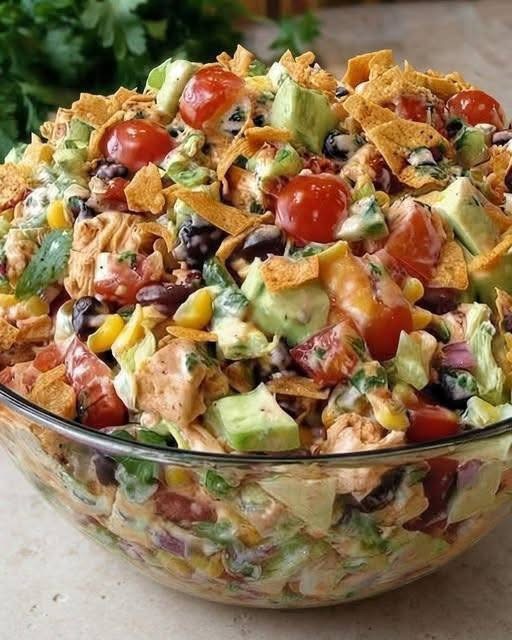
Sure — here is the recipe rewritten into 20 clear paragraphs, while keeping the important information: Tex-Mex Chopped Chicken Salad is a colorful, filling meal combining smoky grilled chicken with crisp romaine lettuce, sweet corn, black beans, tomatoes, avocado, cheese, tortilla strips, and a fresh lime dressing. This salad is ideal for lunch, dinner, meal…
-

Fried Potatoes and Onions
Fried potatoes and onions are a timeless comfort food enjoyed in many cultures around the world. Their simple ingredients create a delicious dish with a crispy exterior, tender interior, and rich, savory flavor. The beauty of this recipe lies in its simplicity. Potatoes and onions are affordable, easy to find, and can be transformed into…