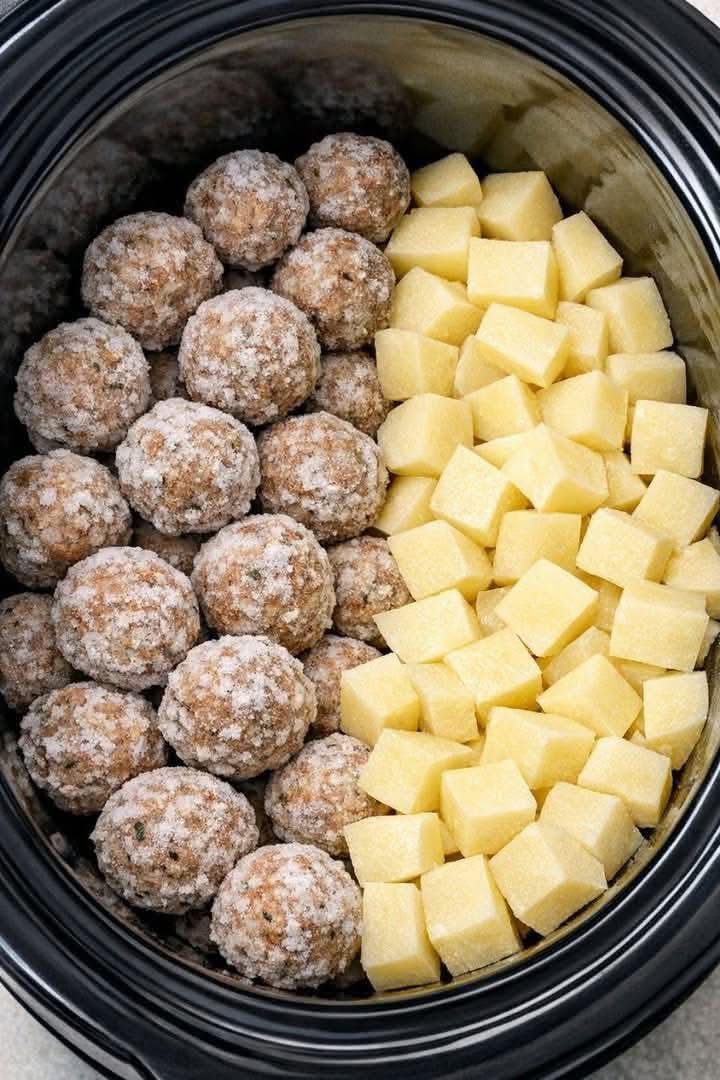
Stew like this is a small rebellion against culinary drama. It refuses spectacle. It asks only for a slow cooker, a few shelf-stable allies, and the patience to let heat do what heat has always done: rearrange molecules into comfort.
At first glance, it looks almost suspiciously simple. Frozen meatballs, potatoes, soup, broth, onion mix. But simplicity in cooking is rarely accidental. It’s compression — layers of food science and habit packed into a short ingredient list.
The frozen meatballs are already structurally stable. They’ve been cooked, set, and seasoned. In the slow cooker, they don’t need transformation; they just need reheating and flavor diffusion. They act like flavor sponges suspended in gravy.
Russet potatoes are doing most of the structural labor. They’re high in starch, low in waxiness. That means as they cook, some of that starch leaks out and thickens the surrounding liquid. You are, in effect, building gravy from the inside out.
The condensed cream of mushroom soup is an engineered emulsion. It contains fat, starch thickeners, and concentrated flavor. When diluted with broth, it becomes a stable sauce base that won’t easily break under long, low heat.
The dry onion soup mix contributes more than onion flavor. It’s a concentrated packet of salt, sugar, and glutamates — compounds that amplify savory perception. That’s why the stew tastes “simmered all day” even though you didn’t build layers from scratch.
Layering the potatoes at the bottom isn’t superstition. Slow cookers heat primarily from the sides and base. Denser vegetables need direct contact with that heat to soften fully. If they float too high, they can remain firm long after everything else is ready.
There’s a quiet physics lesson happening here. Heat transfers slowly through liquid and solid matter. Over six to eight hours, energy moves inward, softening cell walls in the potatoes. Pectin breaks down. Structure yields.
Meanwhile, the meatballs absorb surrounding liquid. Even though they’re fully cooked, they’re porous. Flavor diffuses inward over time, meaning the final bite tastes integrated rather than separate.
Because there’s no browning step, this stew leans on pre-developed flavors. Browning creates Maillard reactions — complex compounds formed when proteins and sugars react at high heat. Without that, you’re relying on the seasoning mix to simulate depth.
That’s not a flaw. It’s a design choice. This is food optimized for time scarcity. It’s culinary triage on a busy weekday.
The thickness of the final sauce depends largely on starch release and evaporation. If the lid stays on, moisture is trapped. Remove it at the end, and water escapes as steam, concentrating flavor and thickening the gravy naturally.
Texture is the real hero here. Soft potatoes coated in thick sauce create what food scientists call high “mouth-coating.” Fat and starch linger on the palate, signaling richness and satisfaction to the brain.
Salt perception becomes important in a dish like this. Packaged components can compound sodium levels quickly. That’s why low-sodium broth isn’t just a suggestion; it’s strategic risk management.
A splash of Worcestershire sauce, if added, deepens complexity through fermented anchovy notes and tamarind acidity. You don’t taste fish — you taste amplified savoriness. Chemistry is sneaky that way.
A spoonful of Dijon mustard can sharpen the gravy slightly. Mustard contains mild acidity and aromatic compounds that brighten heavy dishes without making them taste sour.
Frozen peas stirred in late would introduce chlorophyll color and mild sweetness. Contrast matters. Beige food tastes better when something green interrupts the visual monotony.
Even the act of not stirring vigorously has logic. Agitation can break down potatoes prematurely, turning them into mash. Gentle layering preserves chunk integrity.
What makes this stew culturally interesting is its lineage. It reflects a Midwestern slow-cooker ethos: hearty, practical, unfussy. It prioritizes fullness and reliability over culinary theatrics.
There’s something philosophically satisfying about a meal that requires so little intervention. You assemble matter, apply steady heat, and trust physical laws to cooperate. It’s controlled transformation.
In the end, this stew works because it understands a fundamental truth: comfort food isn’t about novelty. It’s about predictability, warmth, and texture. It’s edible reassurance shaped by time and starch.
-

Amish Pineapple Dump Cake Is the Laziest, Most Delicious Dessert You’ll Ever Make
The Anatomy of the Perfect Dump Cake Great Amish pineapple dump cake has four essential components, all achieved through the magic of layering. The Fruit: Crushed pineapple provides sweetness, acidity, … Read more
-

Discover the Simple Japanese Morning Habit That May Help Support Your Colon Health Naturally
Understanding Colon Health and Why It MattersYour colon plays a key role in your body’s waste elimination process, absorbing water and nutrients while moving things along. When things slow down, … Read more
-
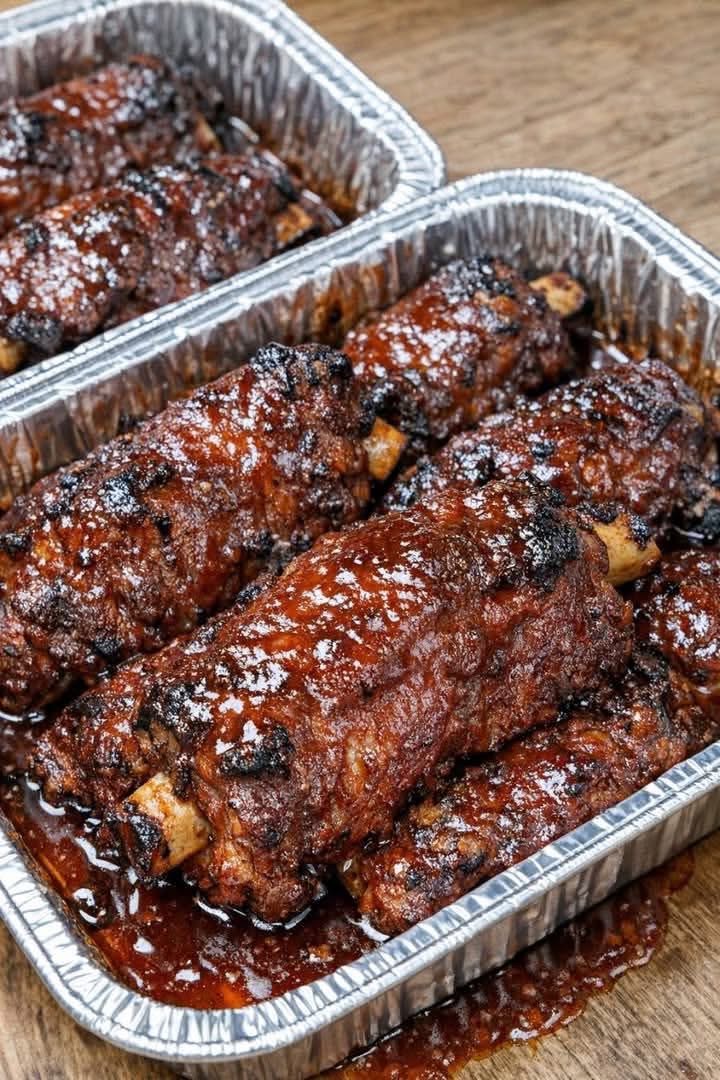
3-Ingredient Slow Cooker BBQ Country Style Ribs
Ever dream of a meal that tastes like it took all day to make, but only requires a handful of ingredients and minimal effort? Imagine tender, succulent pork ribs, coated … Read more